
What is GEO and How Does It Affect SEO?
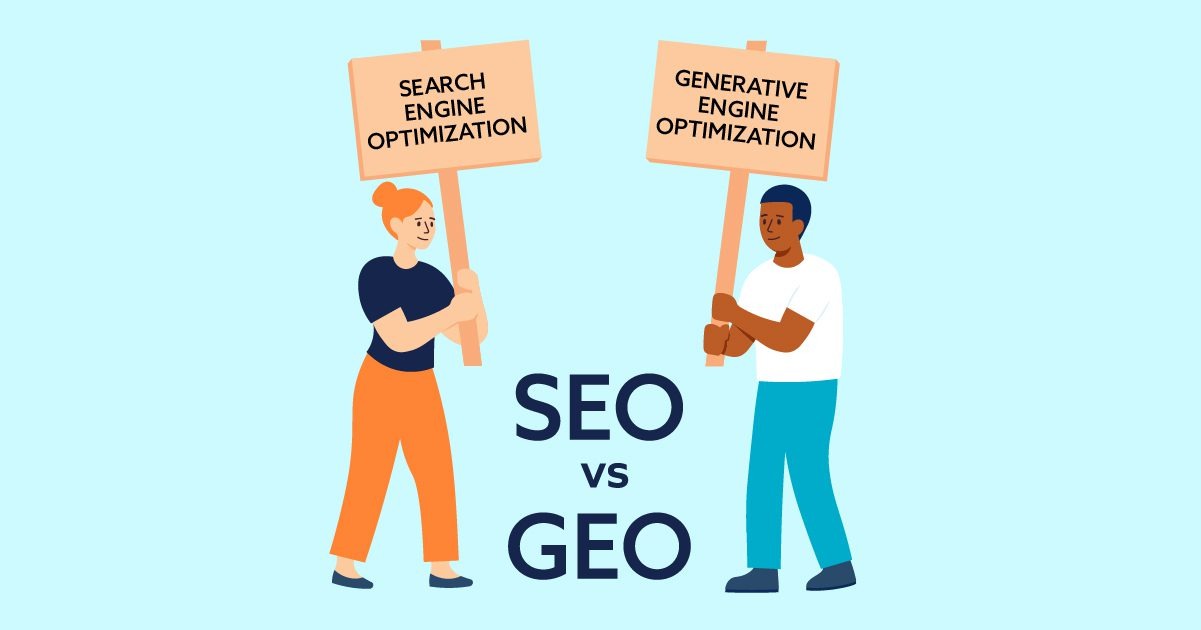

Over the years, we have experienced the evolution of Search Engine Optimization (SEO), and now, AI tools and Large Language Models (LLMs) have been introduced, making it more and more interesting.
These days, you need to optimize your website to fit both human understanding and AI understanding. This is where GEO comes into the picture.
So, what is GEO and how does it affect SEO? We will be explaining all of that in this article.
Let’s start by looking at what GEO is.
What is GEO?
Generative Engine Optimization (GEO) is an extension of SEO that focuses on optimizing your content in a way that AI-driven search tools and generative engines can understand, trust, summarize, and recommend it.
With GEO, whenever an individual asks a question on a search engine, the high-ranking websites are not just displayed; the answer is generated from these websites in the snap of a finger and displayed on top of the websites. So, these days, websites have to be optimized for people and for Generative Engines (GE), so that their content can be used as the answer and displayed at the top of the page.
Basically, SEO helps you rank on search engines. GEO helps you show up inside AI answers.
So, how does the introduction of GEO affect SEO? Let’s find out.
How Does GEO Affect SEO?
• The Way Users Search For Answers
These days, many people are not patient enough to ask questions on search engines and check multiple websites for the answer. This is because they can go to LLMs like ChatGPT, Grok, or Claude and ask a question, and in a split second, they will get an answer that is obtained from the combination of answers from multiple websites and sources.
This could cause a reduction in the number of searches and visits that websites get, even though they are properly SEO-optimized.
• How Content Is Structured
Traditional SEO focuses on factors such as title tags, content quality, keywords, and site speed in order to rank a website highly. With GEO, the focus is mainly on the structure of the content.
AI tools love structured content. They love content that they can easily scan through and understand.
So, if you are optimizing your content for GEO, you need to use clear H2 and H3 headings, break down information into small and understandable parts, and use bullet points where necessary.
Also, you have to keep your answer and paragraphs as short and direct as possible. If you write long, messy paragraphs that are not organized, AI tools will struggle to extract clean answers from them.
There should be no fluff and no hesitation in answering questions. AI tools prefer clarity because they summarize information. So, if your content sounds uncertain, AI engines will skip it.
• Emphasis on Brand Authority
Credibility is measured in traditional SEO through the number of trusted backlinks, reviews, and domain authority, but in GEO, credibility is measured by how many positive mentions your website receives across reliable platforms and communities and how consistent you are in posting content in a particular niche.
With GEO, the content on the website occupying the first spot can be ignored for the one on the third or fourth spot if the content on the latter has topical authority, positions itself more as an expert, and is consistent in a particular niche.
Another way to build brand authority that will be favoured by AI tools is to use the E-E-A-T format in your content.
Experience. Expertise. Authority. Trust.
Writing content that follows this format will make both humans and AI tools trust you.
Final Thoughts
Generative Engine Optimization (GEO) wasn’t created to replace SEO. Instead, it was made to take SEO to the next level.
It is a strategy that makes sure your content isn’t limited to SERPs alone, but it is also included in AI-generated responses in tools such as ChatGPT and other generative engines that most people tend to use these days.